
Daniel Day-Lewis
Biography
Daniel Day-Lewis is a retired British actor, widely regarded as one of the greatest performers in film history. He was born on April 29, 1957, in London, England, into a family connected to literature and cinema his father was poet Cecil Day-Lewis and his mother was actress Jill Balcon.
He trained at the Bristol Old Vic Theatre School and began acting in theatre before moving into film and television in the late 1970s and early 1980s. Early in his career, he gained attention for roles in films such as My Beautiful Laundrette (1985) and A Room with a View (1985), showing strong versatility and emotional depth.
Day-Lewis became known for his extremely immersive acting style, often fully inhabiting his characters both on and off set. He achieved major acclaim with films like The Unbearable Lightness of Being (1988), My Left Foot (1989), and In the Name of the Father (1993), establishing himself as one of the leading actors of his generation.
His career reached legendary status with performances in Gangs of New York (2002), There Will Be Blood (2007), and Lincoln (2012). He won the Academy Award for Best Actor three times, making him the only male actor in history to achieve this record.
Known for his selective approach to roles, he has taken long breaks between films and is recognized for his intense preparation and commitment to realism. In 2017, he announced his retirement from acting after Phantom Thread, directed by Paul Thomas Anderson.
Today, Daniel Day-Lewis is remembered as one of the most influential and respected actors in cinema history, admired for his dedication, transformation ability, and extraordinary performances.

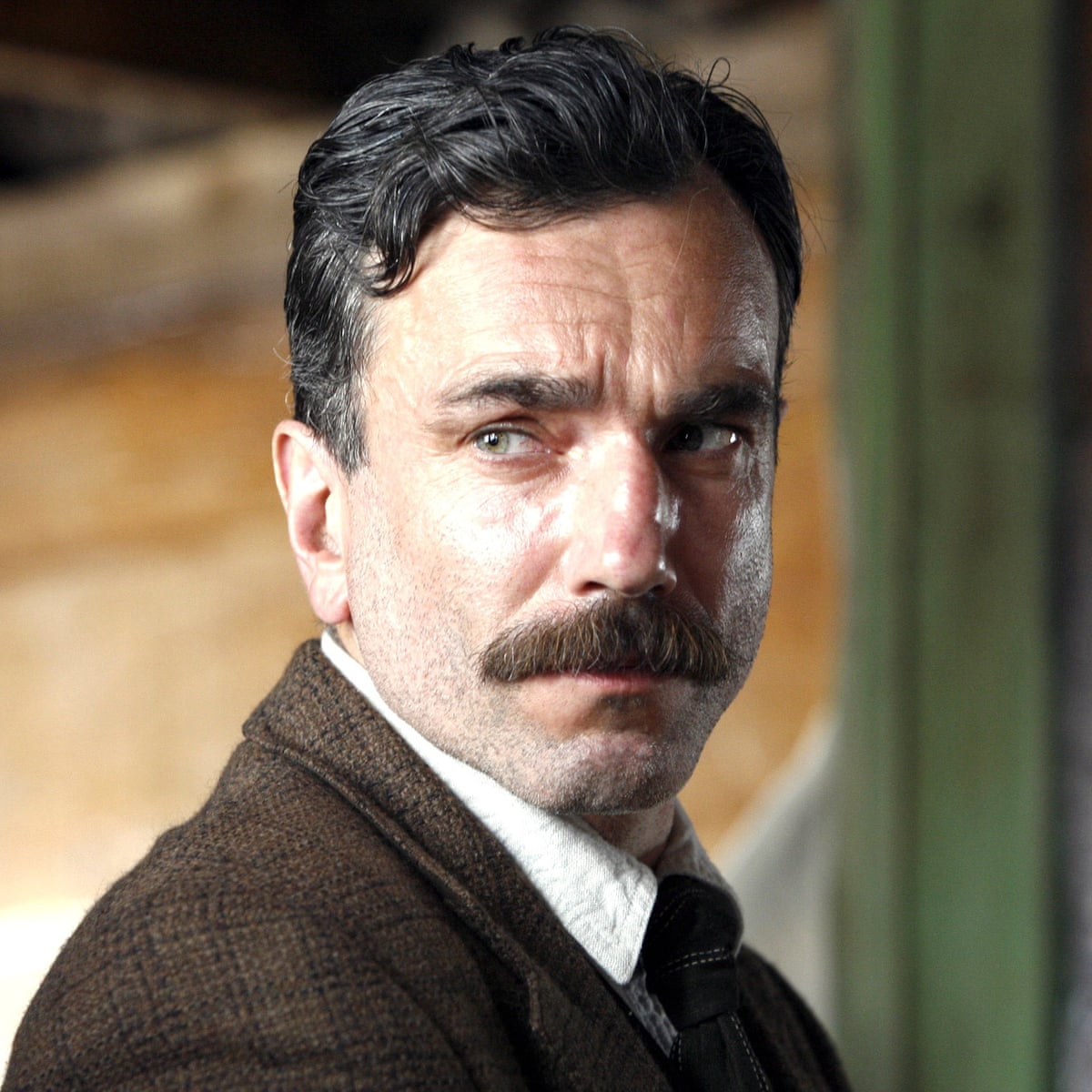
There Will be Blood
2007
There Will Be Blood is a 2007 epic drama directed by Paul Thomas Anderson, starring Daniel Day-Lewis in one of his most acclaimed performances as Daniel Plainview, a ruthless oil prospector.
The story is set in the late 19th and early 20th century during the early oil boom in California. It follows Plainview as he builds his fortune through oil drilling, driven by ambition, greed, and a desire for power. Starting as a silver miner, he transitions into oil exploration, slowly turning into a cold, isolated, and increasingly obsessive businessman.
Plainview adopts a young boy, H.W., to present himself as a family man and gain trust from landowners. However, his obsession with expansion and success begins to destroy his personal relationships and moral boundaries. His growing rivalry with Eli Sunday, a charismatic preacher played by Paul Dano, leads to a long psychological and ideological conflict between capitalism and religion.
As the story progresses, Plainview becomes more isolated, consumed by paranoia and hatred, ultimately cutting himself off from everyone around him. The film ends with a final confrontation between Plainview and Eli that reflects the complete collapse of his humanity.
There Will Be Blood explores themes of greed, ambition, religion, isolation, and the corrupting nature of power. It is widely praised for its intense performances, especially Daniel Day-Lewis’s portrayal, and its powerful cinematography and score, making it one of the most important films of the 21st century.
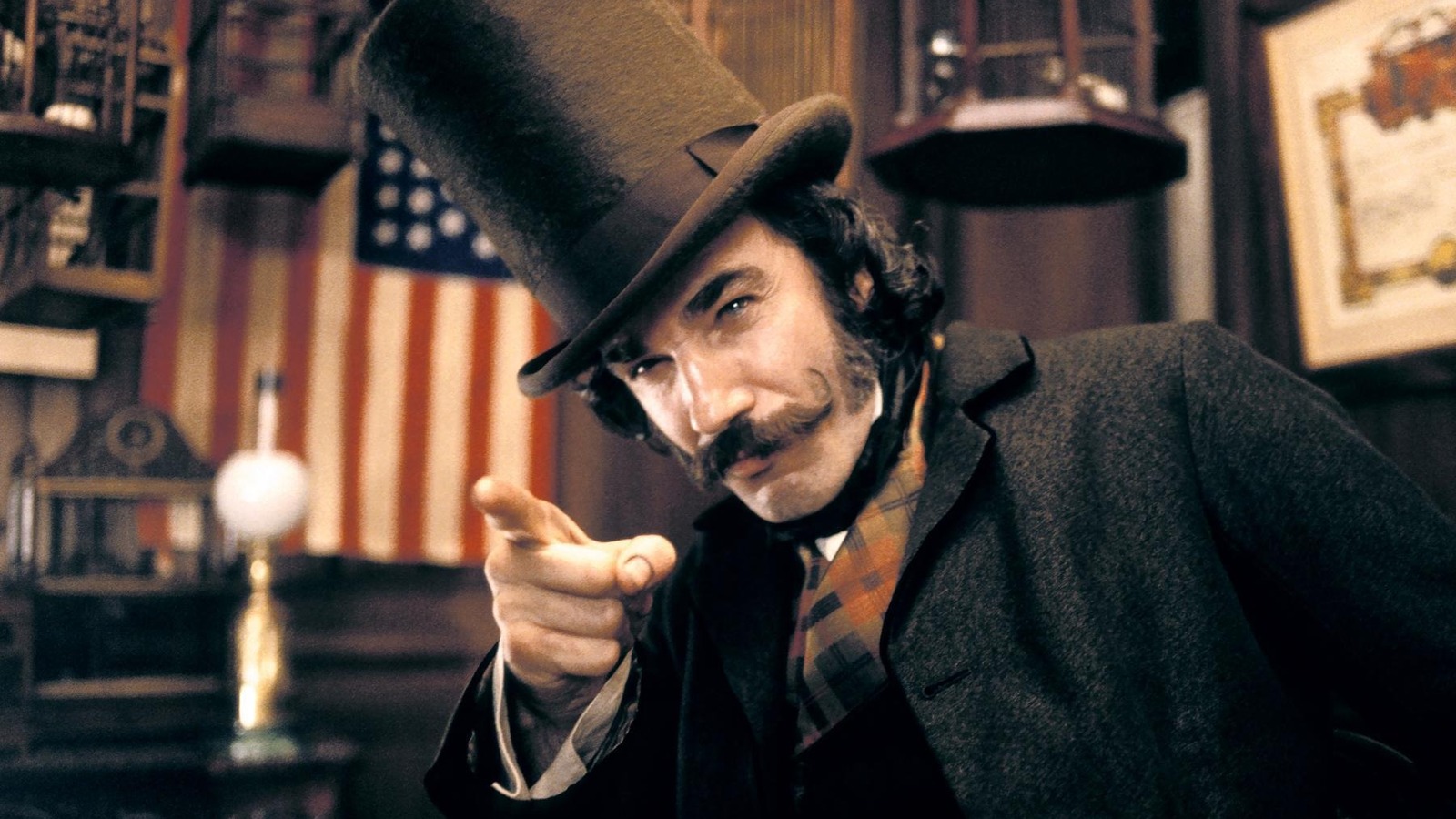
Gangs of New York
2002
Gangs of New York is a 2002 historical drama directed by Martin Scorsese. The film is set in the mid-1800s in the Five Points district of New York City and explores violence, immigration, and political corruption in early American history.
The story follows Amsterdam Vallon, played by Leonardo DiCaprio, a young Irish immigrant who returns to New York seeking revenge for his father’s death. His father was killed years earlier by William “Bill the Butcher” Cutting, played by Daniel Day-Lewis, a powerful and feared gang leader who controls the area through violence and intimidation.
Amsterdam infiltrates Bill’s gang, slowly gaining his trust while secretly planning his revenge. As he becomes closer to Bill, he is forced to confront the brutal reality of gang warfare and political corruption in the city, where rival immigrant groups and native-born Americans fight for control.
The conflict builds toward a violent uprising during the draft riots of 1863, where personal revenge and social chaos collide in a large-scale confrontation that changes the lives of everyone involved.
Gangs of New York explores themes of identity, power, immigration, revenge, and the formation of modern America. It is known for its intense performances, especially Daniel Day-Lewis’s iconic role, and its detailed recreation of historical New York.
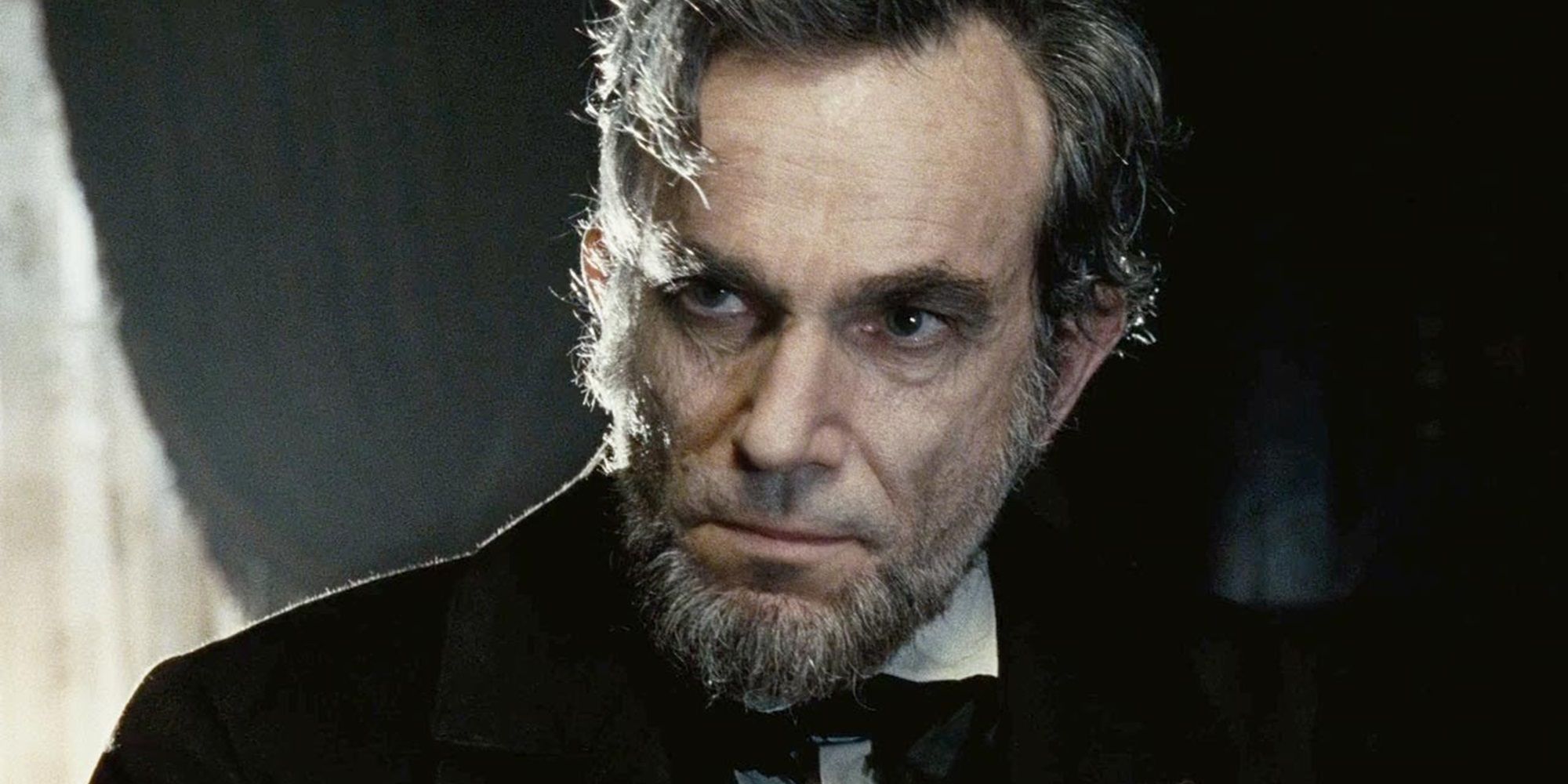
Lincoln
2012
Lincoln is a 2012 historical drama directed by Steven Spielberg. The film focuses on the final months of U.S. President Abraham Lincoln’s life and his effort to pass the 13th Amendment, which would abolish slavery in the United States.
The story takes place during the final year of the American Civil War. Lincoln, played by Daniel Day-Lewis, is shown as a determined and strategic leader who must navigate intense political pressure, opposition from rival politicians, and the ongoing war. Despite these challenges, he pushes forward with his plan to permanently end slavery.
A major part of the film focuses on the political struggle in Congress, where Lincoln and his allies work to secure enough votes for the amendment’s passage. The story highlights debates, negotiations, and moral conflicts among lawmakers, showing the complexity of changing the Constitution during a divided nation.
At the same time, the film also portrays Lincoln’s personal life, including his relationship with his wife Mary Todd Lincoln and his concern for his son Robert, who wants to join the Union army.
Lincoln explores themes of leadership, morality, democracy, and justice. Daniel Day-Lewis’s performance was widely praised for its depth and realism, capturing Lincoln’s humanity as well as his political intelligence.
The film received critical acclaim and is considered one of the most important historical dramas of modern cinema.

Phantom Thread
2017
Phantom Thread is a 2017 psychological drama written and directed by Paul Thomas Anderson. The film stars Daniel Day-Lewis in what became his final screen performance before retirement.
The story is set in 1950s London and follows Reynolds Woodcock, a highly talented but controlling fashion designer who creates dresses for wealthy clients and royalty. He lives a highly structured and obsessive life, carefully controlling his environment, his work, and his relationships.
His routine is disrupted when he meets Alma, played by Vicky Krieps, a young waitress who becomes his muse and romantic partner. At first, their relationship is unstable because of Reynolds’ need for control and perfection, but Alma gradually becomes more assertive, challenging his dominance and emotional distance.
As their relationship develops, it becomes a complex psychological power struggle filled with love, dependency, manipulation, and emotional tension. Both characters push and pull each other in ways that blur the line between affection and control.
Phantom Thread explores themes of love, obsession, power, and intimacy. It is known for its elegant visual style, subtle performances, and its unusual portrayal of a relationship built on both devotion and control.
The film was critically acclaimed and earned several award nominations, including recognition for Daniel Day-Lewis’s performance, before he officially retired from acting after its release.

Anemone
2025
Anemone is a 2025 drama film directed by Ronan Day-Lewis, the son of actor Daniel Day-Lewis. The film marks the return of Daniel Day-Lewis to acting after his retirement following Phantom Thread (2017).
The story of Anemone is centered on complex family relationships, focusing on a fractured father-son dynamic and long-buried emotional trauma. It is set in a remote, atmospheric environment where characters are forced to confront their past, their identity, and the consequences of decisions made years earlier.
Daniel Day-Lewis plays a central role in the film, delivering a deeply emotional performance that reflects themes often associated with his career: isolation, inner conflict, and moral tension. The film is described as intimate and character-driven rather than action-heavy, focusing on psychological depth and emotional realism.
Anemone explores themes of family legacy, forgiveness, grief, and the difficulty of reconciling with the past. It is especially notable because it represents Daniel Day-Lewis’s return to cinema after years of retirement, making it one of the most talked-about film comebacks in recent years.

My Left Foot
1989
My Left Foot is a 1989 biographical drama directed by Jim Sheridan. The film is based on the autobiography of Christy Brown, an Irish writer and painter born with cerebral palsy, who could only control his left foot.
The story follows Christy Brown, played by Daniel Day-Lewis, as he grows up in a poor working-class family in Dublin. Despite severe physical limitations and being initially seen as incapable of communication or independence, Christy begins to show intelligence and artistic talent when he learns to control his left foot.
With the support of his mother and family, Christy develops his ability to write and paint using only his foot. As he grows older, he becomes a recognized writer and artist, while also struggling with isolation, frustration, and the challenges of being understood and accepted.
My Left Foot explores themes of determination, disability, family support, and human dignity. It is widely praised for its emotional depth and powerful performances, especially Daniel Day-Lewis’s portrayal, which required extreme physical commitment to the role.
The film was a major critical success and earned Daniel Day-Lewis his first Academy Award for Best Actor, establishing him as one of the leading actors of his generation.
Awards

Oscar – Best Actor 1990
My Left Foot

Oscar – Best Actor 2008
There Will Be Blood
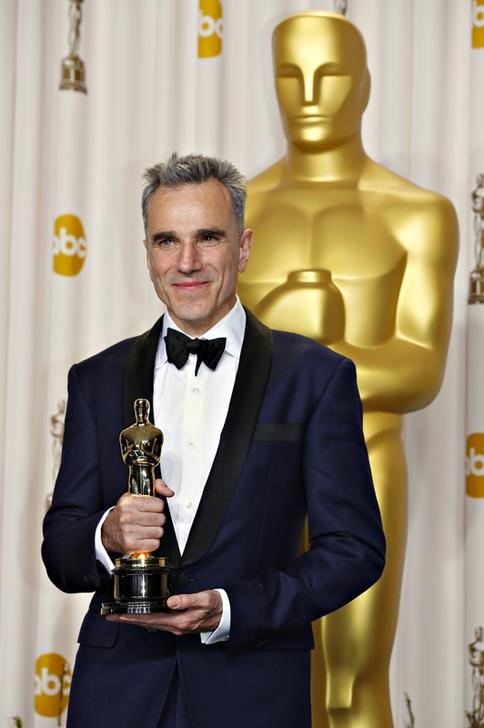
Oscar – Best Actor 2013
Lincoln

BAFTA Award for Best Actor 2013
Lincoln
And others like: Golden Globe Awards (multiple wins for There Will Be Blood, Gangs of New York, Lincoln), Screen Actors Guild Awards (SAG wins and nominations across major roles), New York Film Critics Circle Awards, Los Angeles Film Critics Association Awards, and numerous international critics’ awards recognizing performances in In the Name of the Father, Gangs of New York, and Phantom Thread.
Upcoming Project
Daniel Day-Lewis announced his retirement from acting in 2017, shortly before the release of Phantom Thread. At the time, he said the decision was deeply personal and that he felt it was the right moment to step away from filmmaking after decades of acclaimed performances. Known for taking long breaks between roles and fully immersing himself in each character, Day-Lewis chose to end his acting career at the peak of his success, leaving behind a legacy that includes three Academy Awards for Best Actor and some of the most celebrated performances in cinema history.
Although he retired from acting, Day-Lewis returned for Anemone (2025), a psychological family drama directed by his son, Ronan Day-Lewis. The film marked his first screen appearance since Phantom Thread and was a rare exception to his retirement, as he also co-wrote the screenplay with his son. As of 2026, however, he has not announced any further acting projects, and Anemone remains his only post-retirement film.

 FilmBase