
Quentin Tarantino
Biography
Quentin Tarantino is an American film director, screenwriter, producer, and actor known for his highly stylized, dialogue-driven films that often feature nonlinear storytelling, pop culture references, and sudden bursts of violence. He was born on March 27, 1963, in Knoxville and grew up in California.
Tarantino did not attend film school. Instead, he developed his passion for cinema while working at a video rental store, where he watched and studied a wide range of films. This self-education heavily shaped his filmmaking style and storytelling approach.
He first gained attention with Reservoir Dogs, a low-budget crime thriller that became a cult success. His breakthrough came with Pulp Fiction, which became a global phenomenon, revitalized independent cinema in the 1990s, and earned major critical acclaim.
He went on to direct a series of influential films, including Jackie Brown, the two-part martial arts revenge saga Kill Bill: Volume 1 and Kill Bill: Volume 2, Inglourious Basterds, Django Unchained, The Hateful Eight, and Once Upon a Time in Hollywood.
Tarantino’s style is characterized by nonlinear narratives, long conversational scenes, stylized violence, and heavy use of music and cultural references. His films often blend genres such as crime, westerns, and action while focusing on memorable, often morally complex characters.
He has received major recognition throughout his career, including Academy Awards for screenwriting and numerous honors from international film festivals.
Today, Quentin Tarantino is considered one of the most influential directors of modern cinema, with a lasting impact on both independent and mainstream filmmaking.

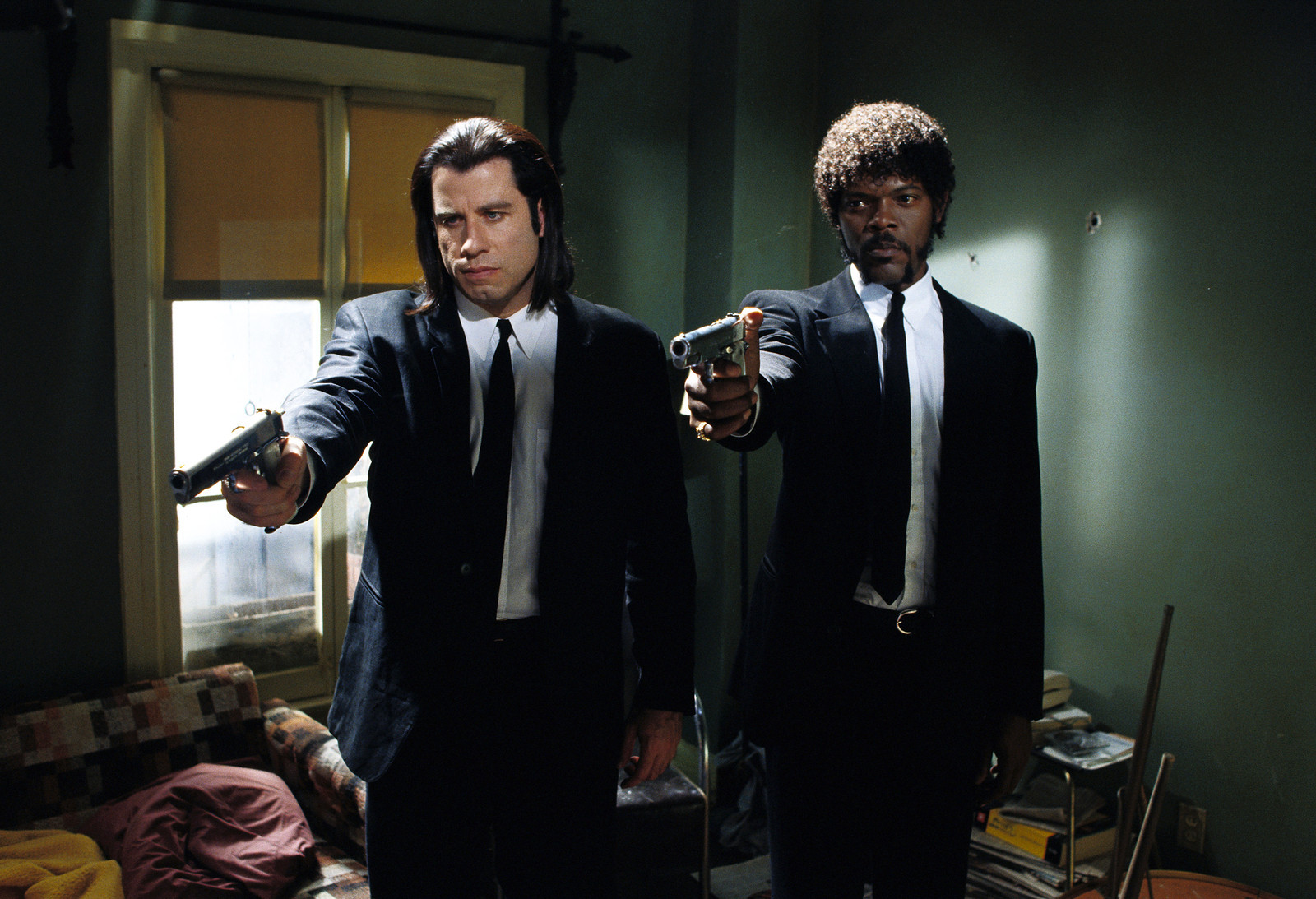
Pulp Fiction
1994
Pulp Fiction is a 1994 crime film directed by Quentin Tarantino. It is known for its nonlinear storytelling, sharp dialogue, and interconnected stories involving criminals in Los Angeles.
The film follows multiple characters whose lives overlap in unexpected ways. These include Vincent Vega, played by John Travolta, and Jules Winnfield, played by Samuel L. Jackson, two hitmen working for mob boss Marsellus Wallace. Their conversations often mix philosophy, humor, and sudden violence.
Another storyline follows boxer Butch Coolidge, played by Bruce Willis, who betrays Marsellus Wallace after refusing to throw a fight. Meanwhile, Vincent is assigned to look after Mia Wallace, played by Uma Thurman, leading to a tense and iconic night out.
The film is famous for its non-chronological structure, where events are shown out of order, gradually revealing how the stories connect. It blends crime, dark comedy, and philosophical themes about fate, redemption, and chance.
Pulp Fiction became a major cultural phenomenon, winning the Palme d’Or at the Cannes Film Festival and earning multiple Academy Award nominations, including Best Original Screenplay for Tarantino.
It is widely regarded as one of the most influential films of the 1990s, reshaping independent cinema and solidifying Tarantino’s reputation as a major filmmaker.
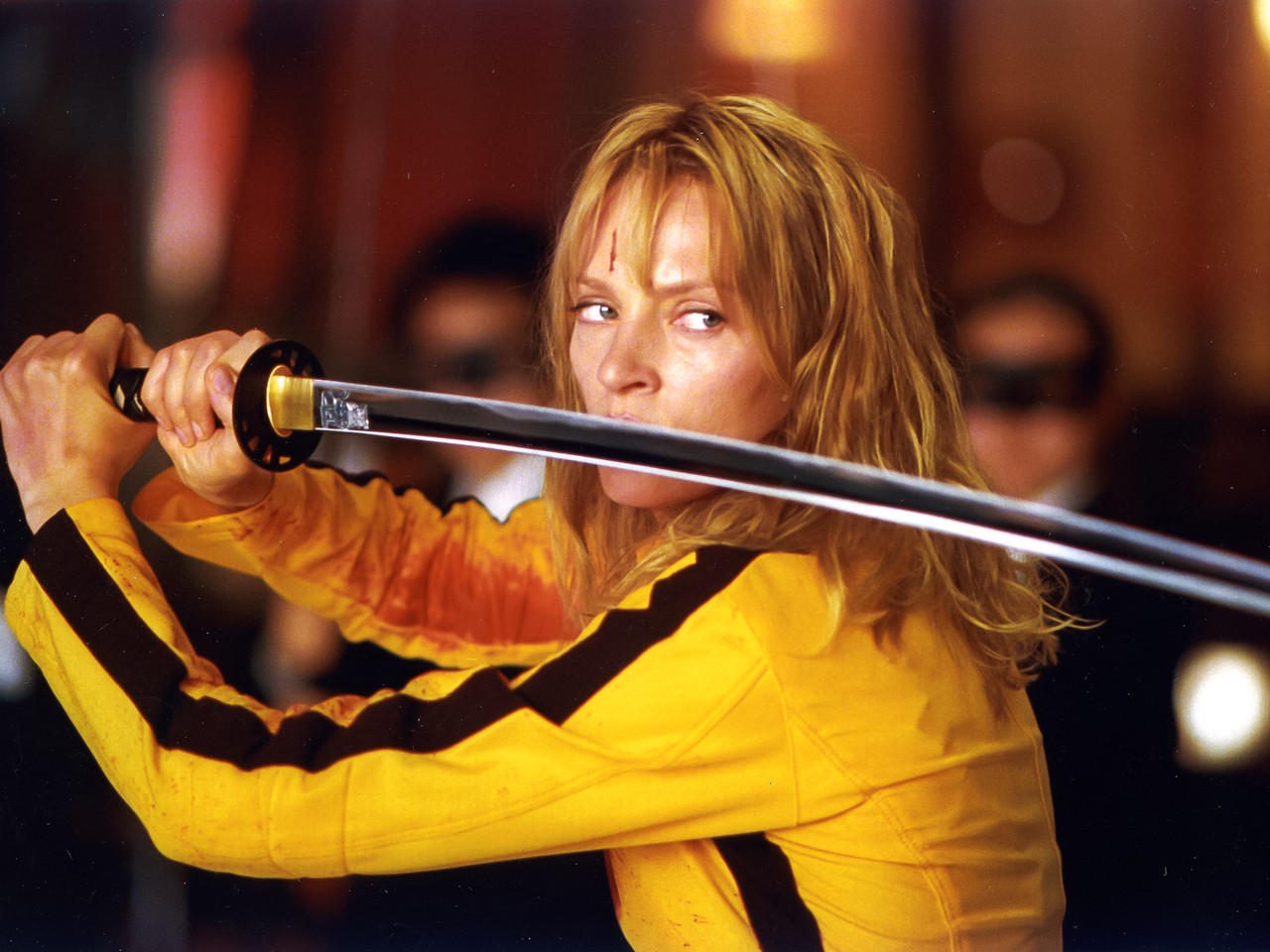
Kill Bill vol. 1
2003
Kill Bill: Volume 1 is a 2003 action film directed by Quentin Tarantino. It is the first part of a two-film revenge story following a former assassin known as “The Bride.”
The story follows The Bride, played by Uma Thurman, who wakes up from a coma after being attacked on her wedding day by her former boss and team of assassins. After discovering that her unborn child is gone, she sets out on a mission of revenge against those responsible.
Her first target is Vernita Green, played by Vivica A. Fox, and later she travels to Japan to confront O-Ren Ishii, played by Lucy Liu, a powerful crime boss. In Japan, she trains with master swordsmith Hattori Hanzo, played by Sonny Chiba, who provides her with a legendary sword.
The film is known for its stylized violence, anime-inspired sequences, and highly choreographed fight scenes, especially the battle against the “Crazy 88” gang.
Kill Bill: Volume 1 explores themes of revenge, survival, and identity while blending martial arts cinema, spaghetti western influences, and Japanese samurai film aesthetics.
It was both a critical and commercial success and is considered one of Tarantino’s most iconic works.
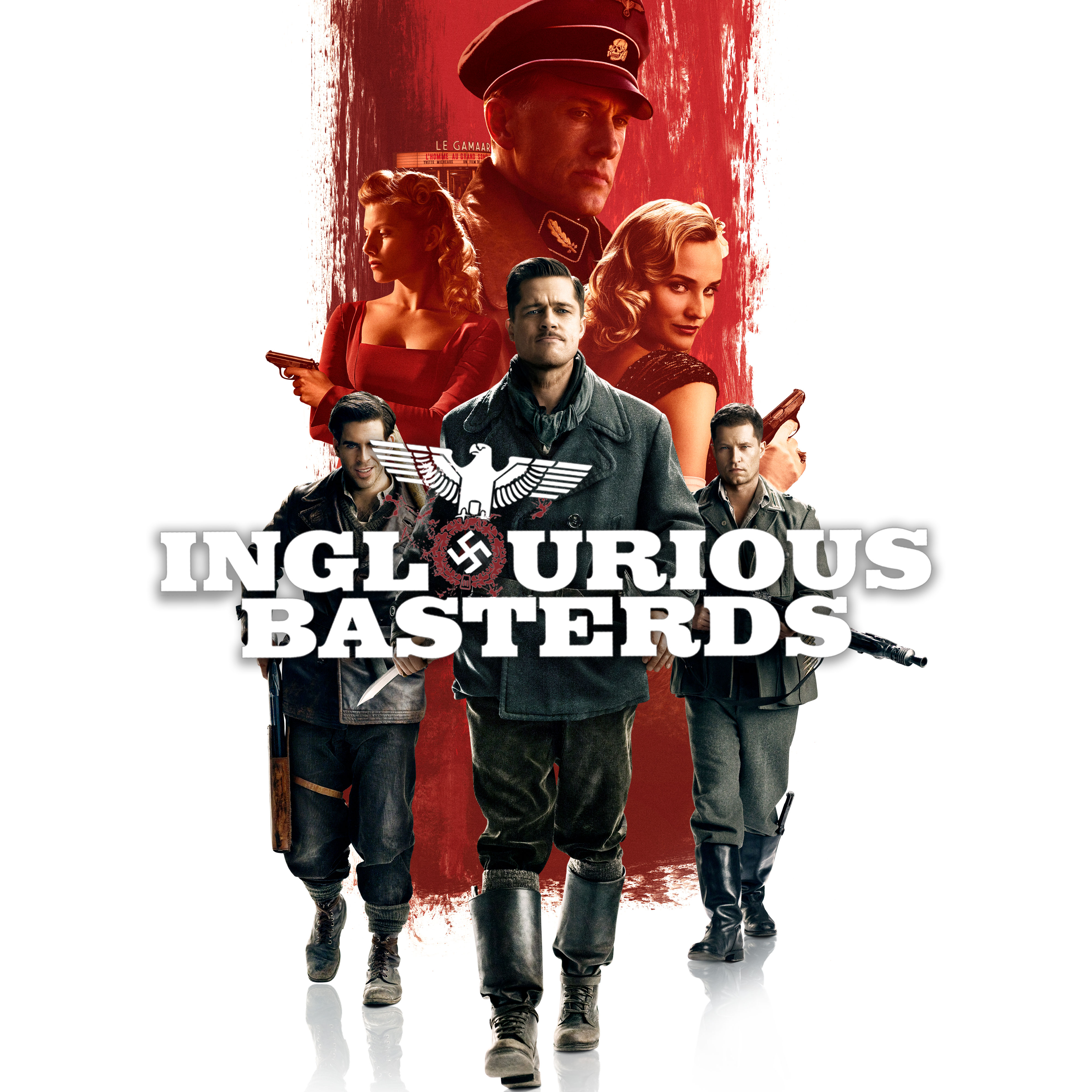
Inglourious Basterds
2009
Inglourious Basterds is a 2009 war film written and directed by Quentin Tarantino. The story is set during World War II and presents an alternate history in which a group of Jewish-American soldiers targets Nazi leaders in occupied France.
The film follows several interconnected storylines. One centers on Lieutenant Aldo Raine, played by Brad Pitt, who leads a squad of soldiers known as the “Basterds,” tasked with spreading fear among Nazi forces through guerrilla tactics.
Another key storyline follows Shosanna Dreyfus, played by Mélanie Laurent, a Jewish cinema owner in Paris who survived a massacre by Nazi officer Hans Landa, portrayed by Christoph Waltz. Years later, she plans her own revenge as the Nazis gather for a film premiere at her cinema.
The film builds toward a fictional climax where both plots collide during a Nazi propaganda film screening, leading to a violent and explosive ending.
Inglourious Basterds is known for its tension-filled dialogue, alternate history storytelling, and strong performances—especially Christoph Waltz’s portrayal of Hans Landa. It explores themes of revenge, power, fear, and rewriting history.
The film was a major critical success and earned multiple Academy Award nominations, including Best Picture, and won Best Supporting Actor for Christoph Waltz.

Django Unchained
2008
Django Unchained is a 2012 Western film written and directed by Quentin Tarantino. The story is set in the American South before the Civil War and follows a former enslaved man who becomes a bounty hunter in search of his wife.
The film follows Django, played by Jamie Foxx, who is freed by German bounty hunter Dr. King Schultz, played by Christoph Waltz. Schultz trains Django and helps him track down criminals across the country while searching for Django’s wife, Broomhilda, played by Kerry Washington.
Their journey leads them to the brutal plantation “Candyland,” owned by Calvin Candie, played by Leonardo DiCaprio, where enslaved people are forced into violent and oppressive conditions. Django and Schultz devise a dangerous plan to rescue Broomhilda.
The film combines Western, revenge, and historical drama elements while exploring themes of slavery, freedom, revenge, and justice. It is known for its stylized violence, sharp dialogue, and strong performances.
Django Unchained received widespread critical acclaim and won Academy Awards for Best Original Screenplay and Best Supporting Actor for Christoph Waltz. It is considered one of Tarantino’s most powerful and controversial films.
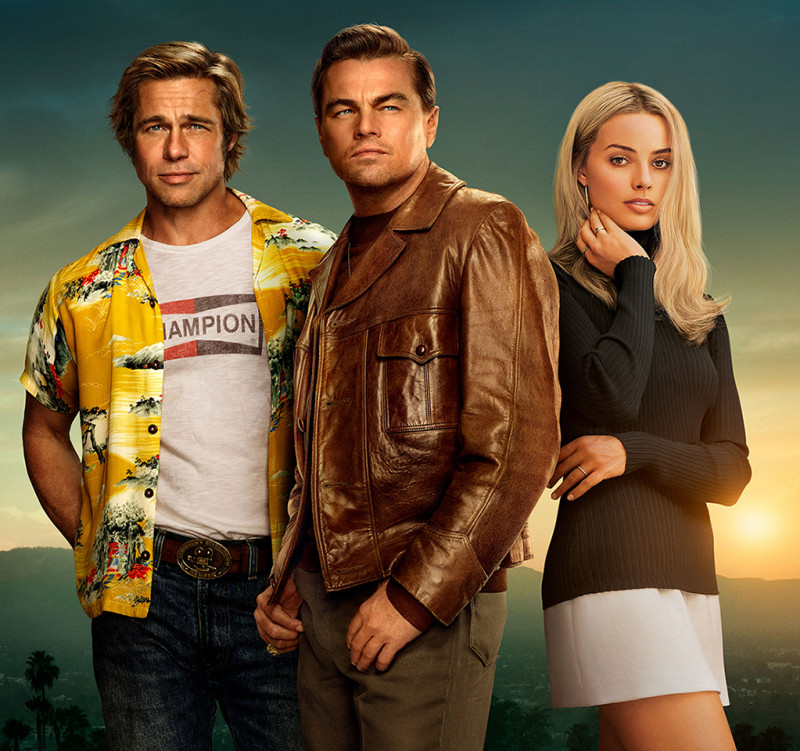
Once Upon a Time… in Hollywood
2019
Once Upon a Time in Hollywood is a 2019 comedy-drama film written and directed by Quentin Tarantino. The story is set in 1969 Los Angeles during the final days of Hollywood’s Golden Age and blends fictional characters with real historical figures and events.
The film follows Rick Dalton, played by Leonardo DiCaprio, a struggling television actor trying to revive his career as the film industry changes around him. His longtime stunt double and friend Cliff Booth, played by Brad Pitt, helps him navigate life in a rapidly evolving Hollywood.
At the same time, the story includes Sharon Tate, played by Margot Robbie, a rising film star living near Rick in Los Angeles. Her storyline portrays her daily life and career during a period of optimism and fame.
The film gradually builds toward the presence of the Manson Family, led by Charles Manson, portrayed by Damon Herriman, whose followers become involved in a dark historical trajectory that intersects with the film’s alternate-history ending.
Once Upon a Time in Hollywood explores themes of friendship, aging, Hollywood mythology, and the end of an era in cinema. It is known for its nostalgic tone, detailed recreation of 1960s Los Angeles, and relaxed, character-driven storytelling.
The film received widespread critical acclaim and won multiple major awards, including Academy Awards for Best Supporting Actor (Brad Pitt) and Best Production Design. It is considered one of Tarantino’s most reflective and stylistically rich works.
The Hateful Eight
2015
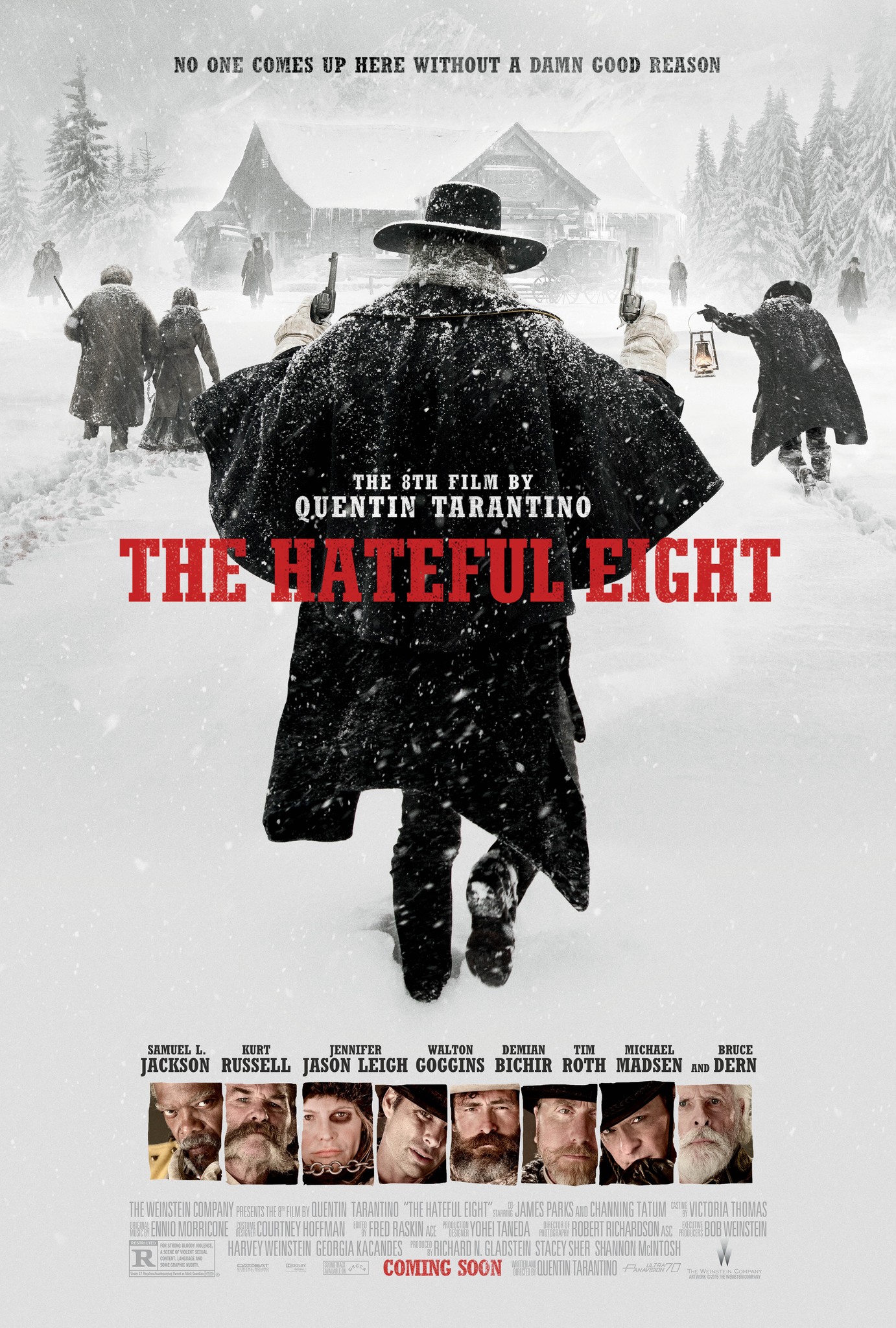
The Hateful Eight is a 2015 Western thriller written and directed by Quentin Tarantino. The story is set in post–Civil War Wyoming during a harsh snowstorm and follows a group of strangers who become trapped together in a remote cabin.
The film centers on bounty hunter John “The Hangman” Ruth, played by Kurt Russell, who is transporting prisoner Daisy Domergue, played by Jennifer Jason Leigh, to stand trial. Along the way, they pick up other travelers, including Major Marquis Warren, played by Samuel L. Jackson, and Sheriff Chris Mannix, played by Walton Goggins.
As the group takes shelter from the blizzard, tensions rise and suspicions grow. It becomes clear that not everyone in the cabin is who they claim to be, and hidden agendas begin to surface. The situation escalates into violence as secrets and betrayals are revealed.
The film is known for its slow-building tension, confined setting, and long dialogue-driven scenes, as well as its widescreen cinematography and use of suspense.
The Hateful Eight explores themes of distrust, revenge, racism, and moral ambiguity. It received critical praise for its performances, screenplay, and Ennio Morricone’s award-winning musical score.
Awards
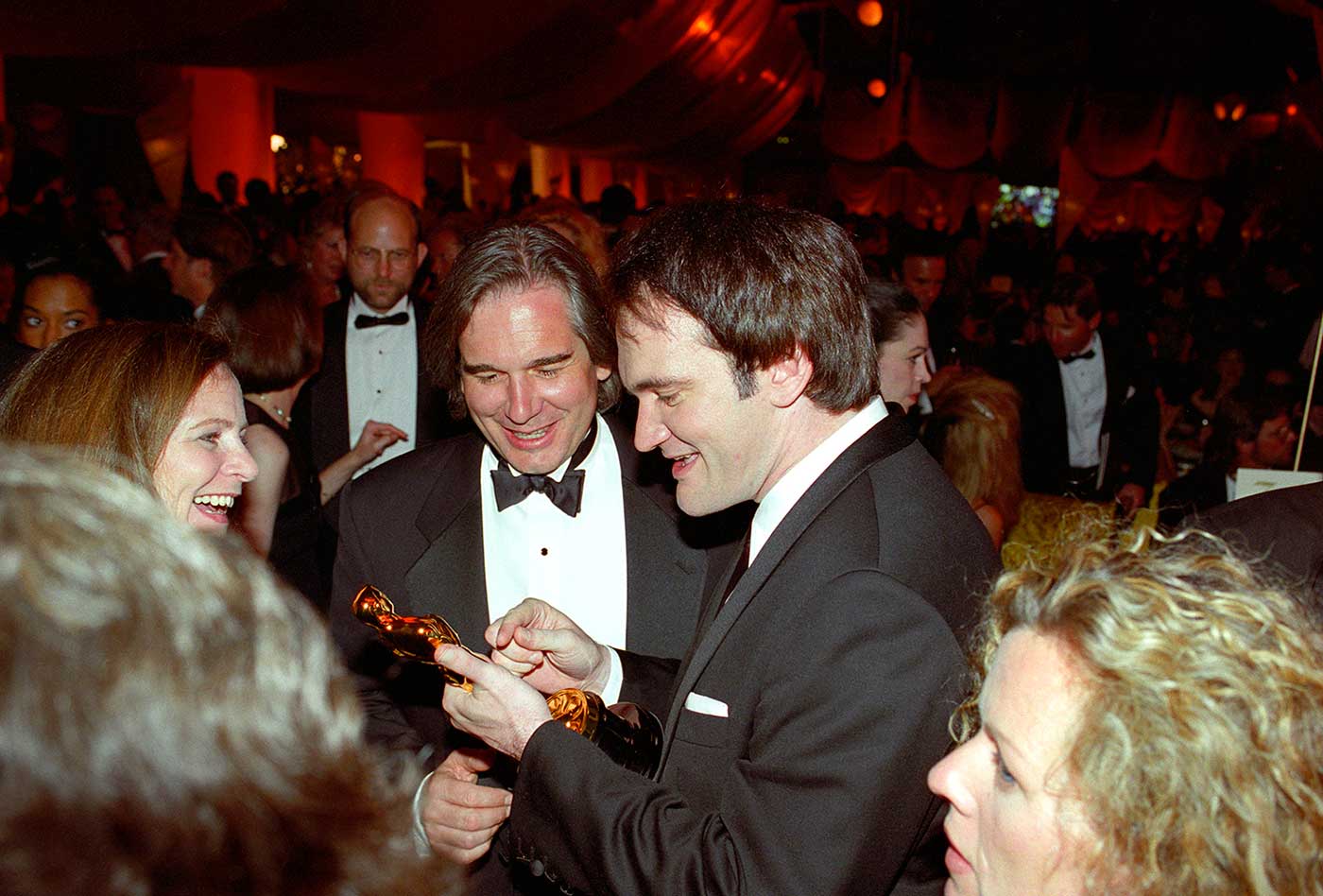
Oscar – Best Original Screenplay
Pulp Fiction

Oscar – Best Original Screenplay
Django Unchained

Golden Globe – Best Screenplay
Once Upon a Time… in Hollywood

Golden Globe – Best Screenplay
Django Unchained
And others like: BAFTA Awards (Best Original Screenplay for Pulp Fiction and Django Unchained), Cannes Film Festival Palme d’Or for Pulp Fiction, Independent Spirit Awards (Best First Feature for Reservoir Dogs, plus multiple screenplay and directing honors), Critics’ Choice Movie Awards (screenplay awards for Pulp Fiction, Django Unchained, and Once Upon a Time in Hollywood), National Board of Review Awards, Venice Film Festival and other international festival honors, Hollywood Walk of Fame Star, and various lifetime achievement tributes from global film institutions and festivals.
Upcoming Project
The Movie Critic was an announced but ultimately shelved project from Quentin Tarantino that was intended to be his tenth and possibly final film.
The story was set in 1970s California and focused on a film critic who writes for a pornographic magazine. The main character was described as a sharp, cynical, and highly opinionated writer who reviews films with a provocative and often controversial style. Tarantino reportedly based the character on a real critic he had read in his youth, though the identity was never officially confirmed.
The film was expected to explore the world of 1970s Hollywood through the perspective of this critic, blending fictional storytelling with the atmosphere of the era’s film culture. Early descriptions suggested a tone similar to Tarantino’s previous character-driven works, with strong dialogue, dark humor, and a detailed recreation of the period.
Although a script was reportedly completed and early development had begun, Tarantino later decided not to move forward with the project. He felt that the idea was not as compelling to film as originally thought and chose to set it aside in favor of exploring other creative directions.
As of now, The Movie Critic remains unproduced, with no confirmed plans for it to be revived or released.
 FilmBase